

Pneumatic conveying solution for polyacrylamide
During the production and use of polyacrylamide (PAM), many companies face difficulties in material conveying. Polyacrylamide powder easily absorbs moisture and clumps, causing poor feeding and pipeline blockages; At the same time, their light density and heavy dust emissions not only cause material waste but also pose threats to the working environment and operator health. In addition, traditional manual feeding methods have inaccurate and inefficient measurements, making it difficult to meet the demands of continuous and automated production. Finding a conveying solution that can address these pain points while maintaining the original performance of materials has become an urgent need within the industry.
Material properties: Understand the physical and chemical behavior of polyacrylamide
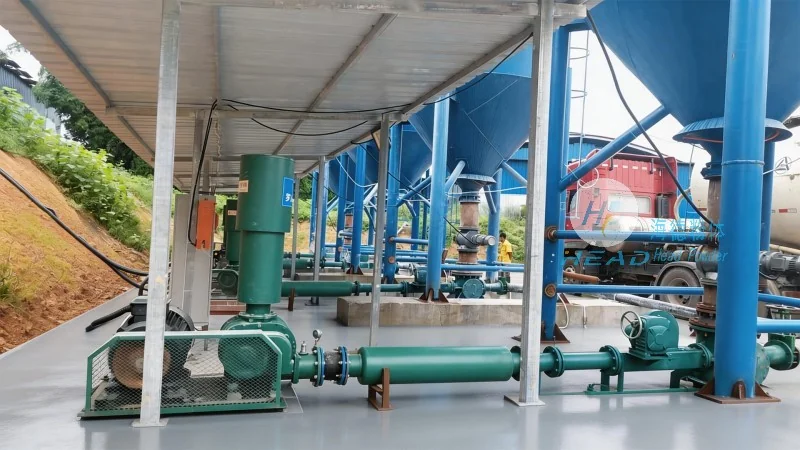
Polyacrylamide is a high-molecular polymer, commonly appearing as a white or pale yellow powder or granules. Its notable features include: strong hygroscopicity (it can quickly absorb moisture and clump when relative humidity exceeds 60%); The lower bulk density (usually between 0.5-0.7 g/cm³) makes it easy for it to fly in airflow; Sensitive to shear forces, mechanical friction may damage molecular chains, affecting solubility and performance; Additionally, the material has a slight tendency for electrostatic adsorption, increasing the risk of wall adhesion during conveying. These characteristics require the conveyor system to adopt a sealed, low-shear, and anti-condensation design.
Product Introduction: Polyacrylamide pneumatic conveying system equipment
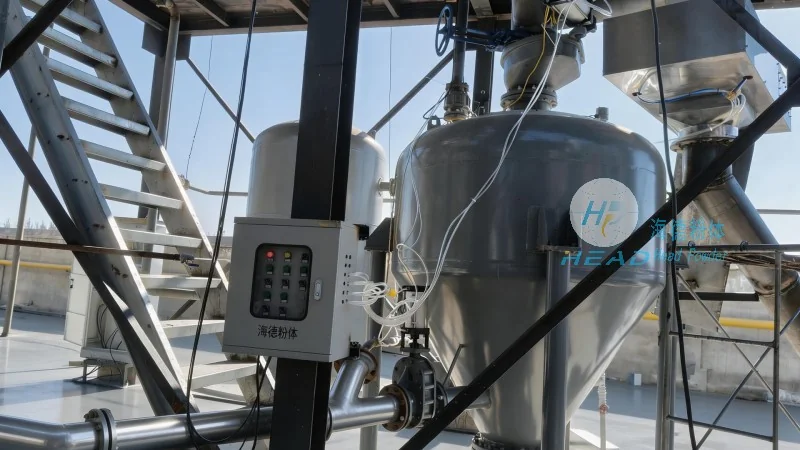
Head Powder offers customized pneumatic conveying solutions tailored to the material characteristics of polyacrylamide. This system uses sealed pipelines for conveying, utilizing compressed air or nitrogen as power sources to smoothly transport materials from the storage silo to the point of use. Depending on project conditions, multiple modes can be selected, including positive pressure dilute phase, negative pressure dilute phase, and dense phase conveying. The core components of the system include: moisture-proof silos, rotary feeders, Roots blowers/air compressors, dehumidification and drying devices, automatic control systems, and more. The entire set of equipment can be integrated into DCS or PLC systems to achieve fully automatic operation and feature remote monitoring and alarm functions.
Product Advantages: Targeted solutions to customer pain points
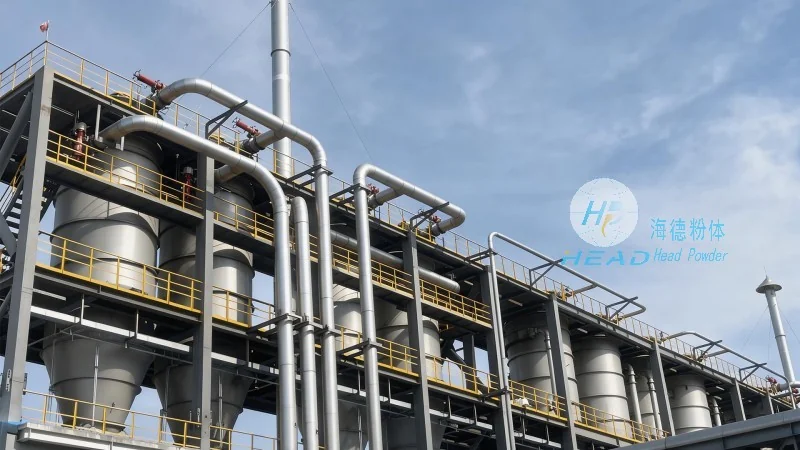
To address the issue of polyacrylamide easily absorbing moisture and caking, Head Powder has equipped the system with a high-efficiency dehumidification unit and heat tracing device at the front end, helping the gas dew point in the pipeline to be below the moisture absorption threshold, thereby preventing caking at its source. To address the pain points of dust flutter and inaccurate measurement, the system adopts fully enclosed negative or positive pressure conveying, combined with high-precision weighing modules or weightless feeders, to achieve continuous and relatively accurate feeding control, with metering errors controlled within ±0.5%. To protect the material molecular chain, large curvature radius bends are selected at elbows and key locations, lined with wear-resistant materials, effectively reducing shear force. Additionally, the modular design makes equipment assembly and cleaning convenient, with low maintenance costs and flexible expansion for different production capacities.