

Pneumatic conveying solution for mineral powder
During traditional powder transportation, issues such as dust accumulation, high material loss, severe equipment wear, high labor costs, and substandard environmental conditions often arise. Especially for long-distance sealed conveying, how to improve conveying efficiency while reducing equipment failures and maintenance frequency has become an urgent bottleneck for many enterprises.
Material characteristics
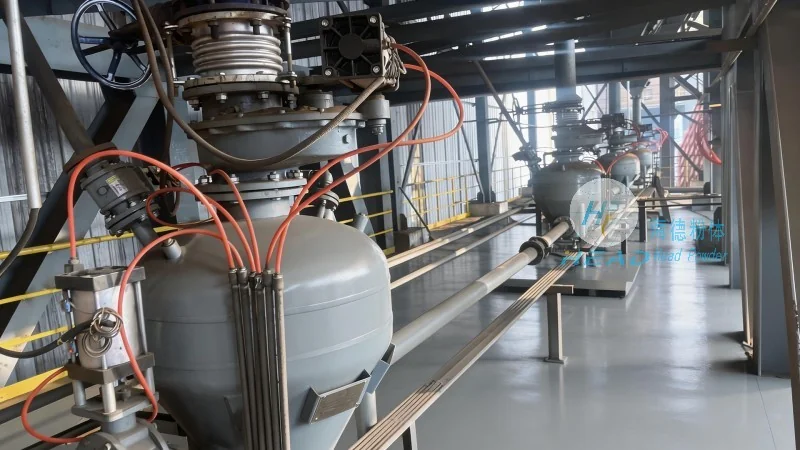
Mineral powder is a fine powdery material, with particle sizes usually between 0.1~0.5mm, high density, and large fluidity differences. Some mineral powders exhibit typical grinding properties, causing significant wear on conveying pipelines and elbows; At the same time, it is prone to moisture absorption and caking, which places high demands on the sealing and gas source stability of the conveying system.
Product Introduction
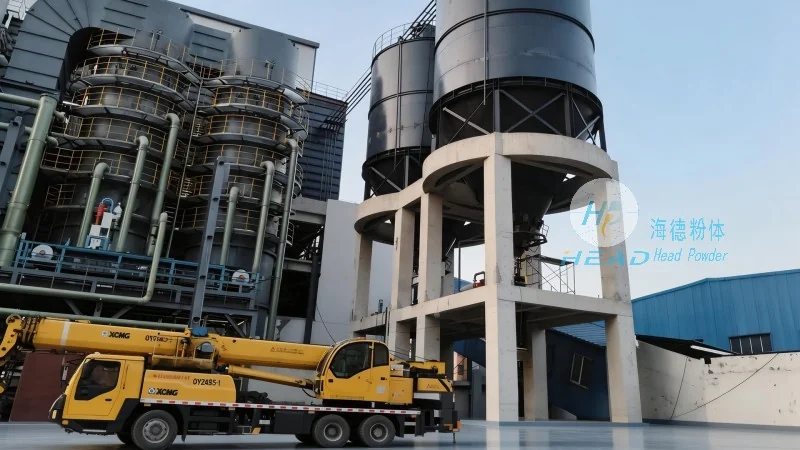
The pneumatic conveying system provided by Head Powder is a complete set of equipment that uses compressed air or negative pressure airflow to transport mineral powder along pipelines to its location. This system can be customized for different mineral powder characteristics (such as density, particle morphology, humidity, grindingability, etc.), covering multiple methods including positive pressure conveying, negative pressure conveying, dense phase conveying, and dilute phase conveying. The system integrates modules for efficient feeding, air source purification, pipeline routing optimization, automatic control, and dust removal, enabling clean, stable, and energy-saving mineral powder conveying operations.
Product advantages
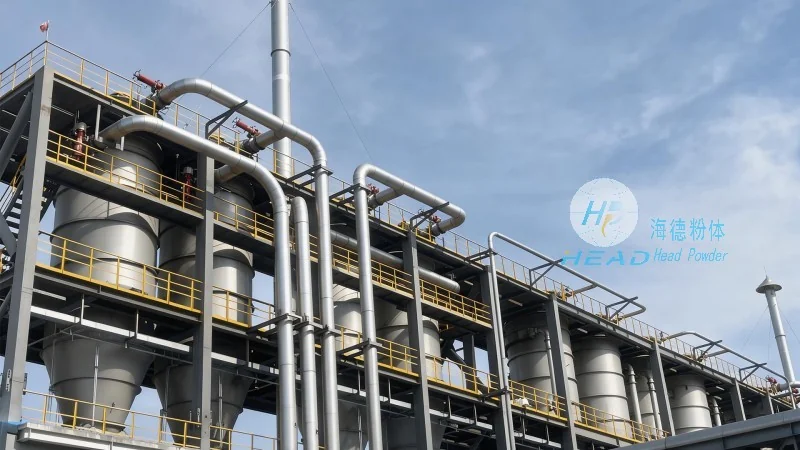
To address core pain points in ore powder transportation—dust control, energy consumption optimization, and equipment lifespan extension—Head Powder's solution offers the following advantages: excellent sealing to suppress dust escape from the source; Flexible pipeline routing to accommodate complex factory layouts; Wear-resistant elbows and pipes are used to effectively extend equipment service life; The automated control system adjusts the gas-solid ratio in real time, reducing energy consumption and minimizing the risk of blockages; Modular design facilitates later maintenance and expansion.