

Pneumatic conveying solution for humic acid powder
During transportation, storage, and feeding, humic acid powder often faces issues such as dust flying, material adhesion, and pipeline blockages, resulting in harsh production environments, high raw material loss rates, and increased equipment maintenance costs. Traditional manual handling or mechanical conveying methods are inefficient, making it difficult to meet the demands of continuous and automated production, while also posing safety risks and pressure to meet environmental protection standards.
Material characteristics
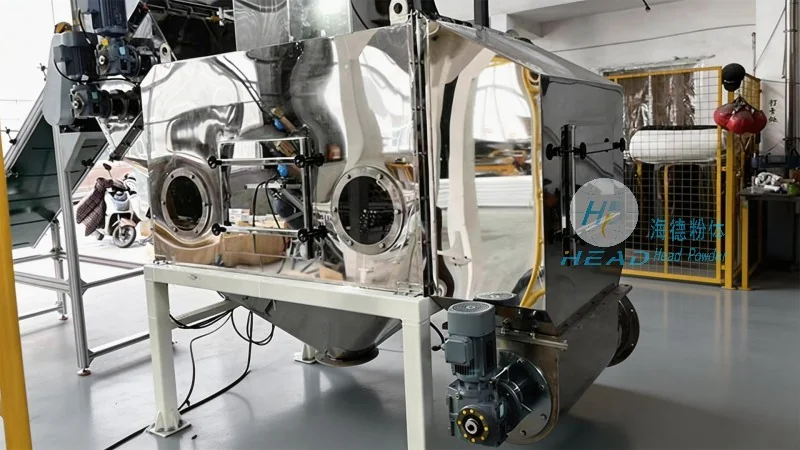
Humic acid powder has characteristics such as low density, fine particle size, easy moisture absorption, and easy agglomeration. During pneumatic conveying, static electricity and adsorption of pipe walls are prone to generation, and it requires high sealing and moisture resistance in the conveying system. Its particle shape is irregular and has a high coefficient of friction, so it is necessary to select appropriate conveying concentration and speed based on actual working conditions to avoid deposition or breakage.
Product Introduction
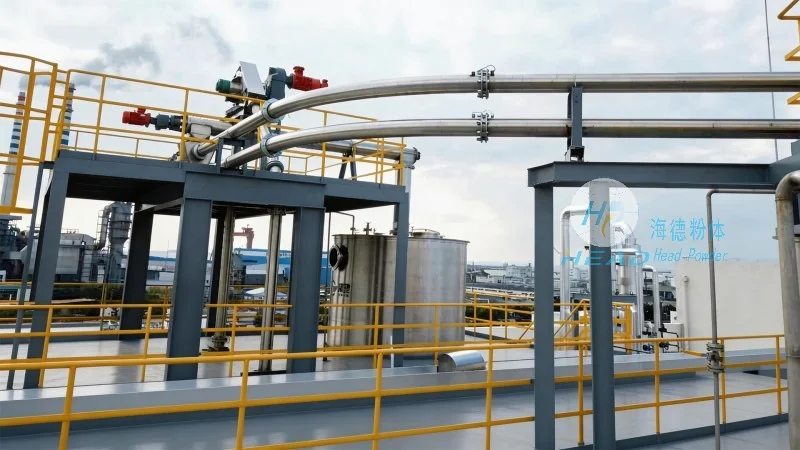
Our pneumatic conveying solution for humic acid powder uses a sealed pipeline system and uses compressed air or inert gas as the power source to achieve directional material delivery. The system integrates negative pressure or positive pressure conveying methods, allowing customization of sending tanks, rotary feeders, dust removal devices, and automated control systems according to the physical properties of humic acid powder, meeting the full pneumatic conveying needs from feeding to packaging.
Product advantages
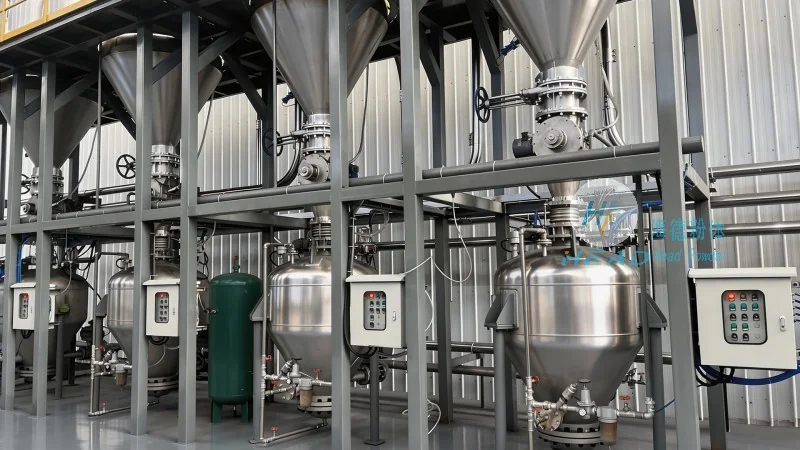
To address the pain points of humic acid powder being prone to dust accumulation and clogging, our pneumatic conveying solution adopts a fully enclosed pipeline design and anti-static lining, effectively suppressing dust leakage and reducing material loss. The system is equipped with a pulse reverse blow filter dust collector, which helps meet exhaust emission standards. At the same time, the intelligent control module enables real-time adjustment of conveying pressure and flow rate, preventing pipeline blockages, and supporting remote monitoring and fault alarms, reducing manual intervention frequency and improving production continuity and safety.