

Pneumatic Conveying Solution for Resin Micropowder
During the transportation and feeding of resin micropowder, common issues include severe dust pollution, frequent pipeline blockages, low manual handling efficiency, and high material loss. Traditional mechanical conveying methods struggle to adapt to the characteristics of fine powders, resulting in a dirty production environment, high equipment maintenance costs, and hidden dangers such as static electricity accumulation and moisture absorption and caking, affecting the stability of continuous production.
Material characteristics
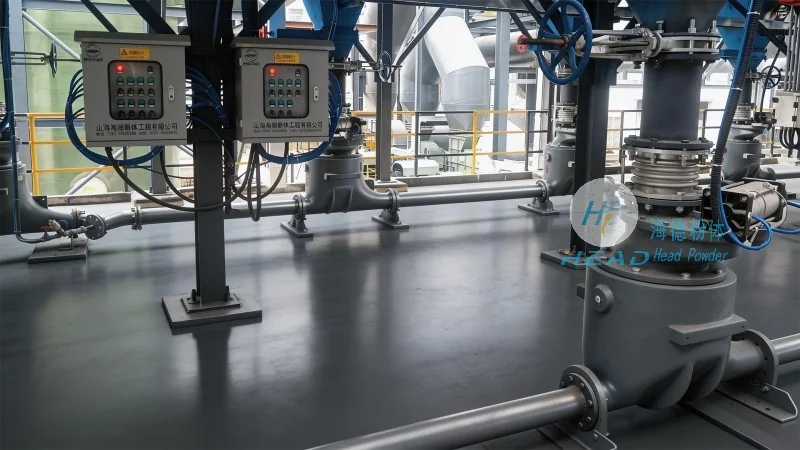
Resin micropowder has fine particle size (usually 200-800 mesh), low bulk density, poor flowability, prone to static electricity, and sensitive to humidity. During conveying, they tend to agglomerate and stick to walls, requiring a sealed, low-shear, and anti-static conveying solution to improve material quality and system reliability.
Product Introduction
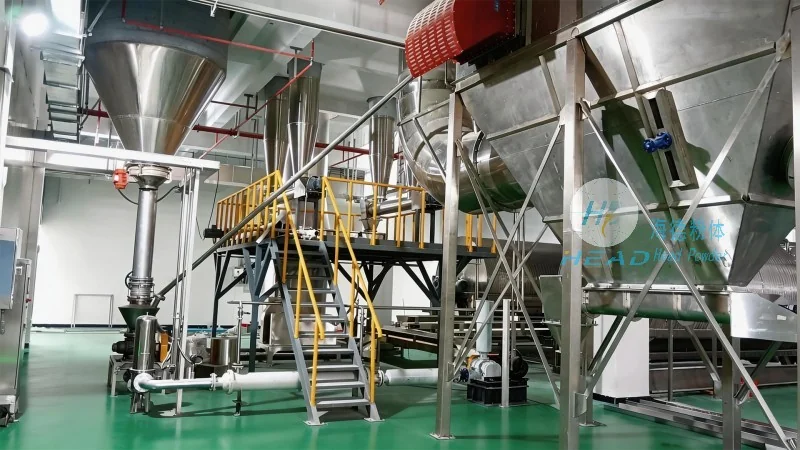
The Head powder resin micropowder pneumatic conveying system is a complete solution developed for the above material characteristics. The system uses sealed pipelines under positive or negative pressure, enabling automated feeding from raw material silos to production equipment. Core equipment includes sending tanks, rotary feed valves, high-efficiency dust collectors, PLC control cabinets, etc., which can be customized in layout and configuration according to customers' site space and capacity requirements.
Product advantages
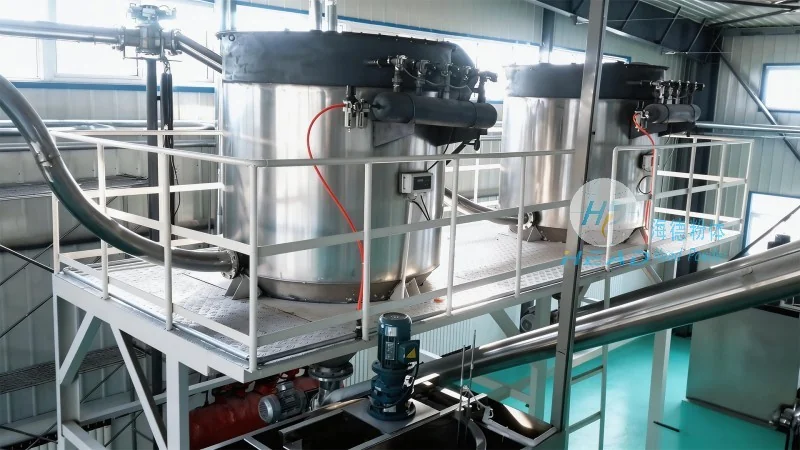
To address customer pain points, Head Powder Solutions offers multiple responses: fully sealed pipelines prevent dust leakage and improve workshop environments; The automation control module reduces manual operations and lowers labor intensity; Optimize elbow curvature and pipeline slope to effectively prevent blockages; Equipped with anti-static grounding and dehumidifying components to address material static electricity and moisture absorption issues. The system operates stably and is easy to maintain, improving production efficiency and product yield.