

Pneumatic conveying scheme for ammonium chloride particles
In industries such as chemicals and fertilizers, the conveying stage of ammonium chloride particles often faces issues such as dust pollution, material damage, equipment blockages, and high labor costs. Traditional mechanical conveying methods, such as belt or screw conveying, not only easily cause material clumping and severe dust, but also require frequent maintenance and high energy consumption. Especially in high humidity environments, ammonium chloride particles easily absorb moisture and clump together, causing blockages in transmission pipelines and affecting production continuity. These issues urgently require an efficient, sealed, and low-loss conveying solution.
Material characteristics: Key properties of ammonium chloride particles
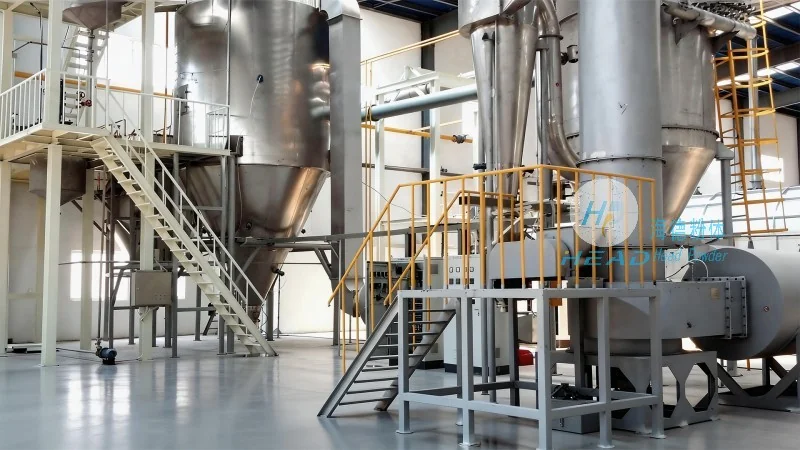
Ammonium chloride particles are a white crystalline powder or granules with typical hygroscopicity and tend to clump in humid environments. Its particle size is usually between 0.5-5mm, bulk density is about 0.8-1.2g/cm³, and its fluidity is average. The material has moderate hardness and is generally prone to wear on conveying equipment. Additionally, when ammonium chloride dust reaches its usual concentration in the air, there is a typical dust explosion risk. Therefore, the conveying system needs to be moisture-proof, anti-clogging, explosion-proof, and low-dust features.
Product Introduction: Pneumatic conveying system for ammonium chloride particles
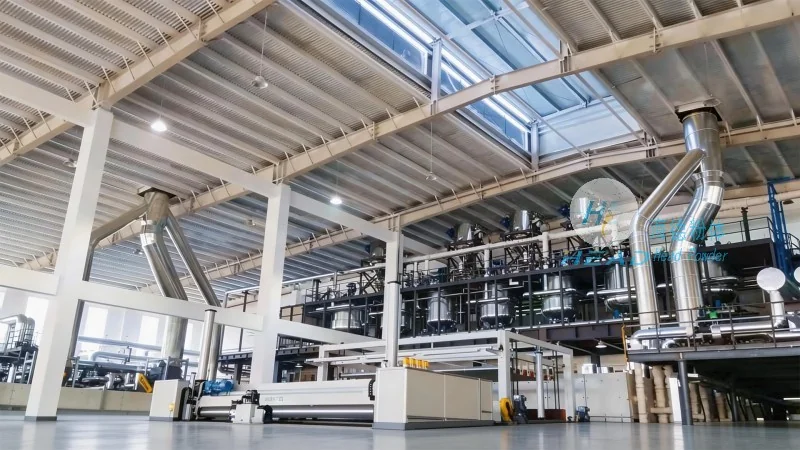
The ammonium chloride particle pneumatic conveying system provided by Head Powder uses sealed conveying methods of positive or negative pressure, transporting materials from the supply point to the discharge point through pipelines. The system consists of a feeding device, conveying pipeline, dust separation and removal device, control system, and other components. To address the hygroscopicity and wear-prone characteristics of ammonium chloride particles, the equipment interior uses stainless steel or special coated materials, and is equipped with moisture-proof pretreatment devices. The system can operate automatically, reducing manual intervention and meeting the bulk, long-distance conveying needs of industries such as chemicals, fertilizers, and building materials.
Product Advantages: Targeted solutions to customer pain points
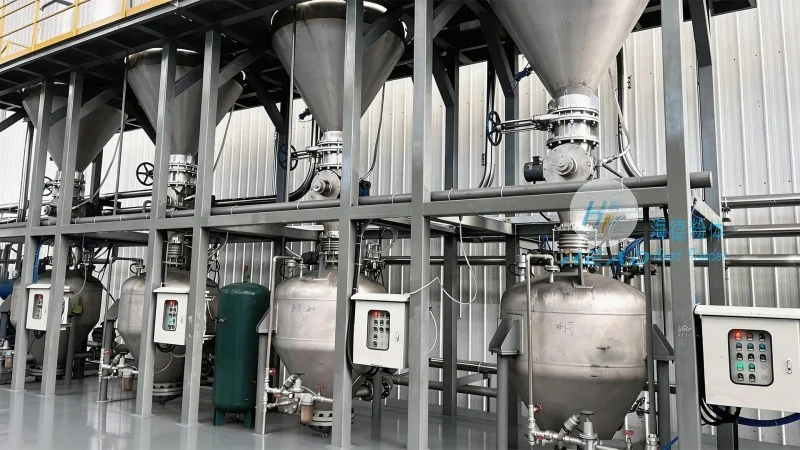
- Sealed conveying with no dust leakage: The entire conveying process is carried out in sealed pipelines, effectively suppressing dust dispersion, improving the working environment, and meeting environmental protection requirements.
- Moisture-proof and clogged design: Equipped with material pretreatment and pipeline heat tracing or drying auxiliary devices to prevent moisture absorption and caking, facilitate smooth conveying, and reduce downtime failures.
- Low breakage rate protects particle integrity: By optimizing airflow velocity and elbow structure, it reduces collision and friction with particles during conveying, maintaining the original quality of the material.
- Intelligent control reduces labor costs: Uses a PLC automated control system to monitor conveying status in real time, enabling remote operation and fault alarms to improve operational efficiency.