

Pneumatic conveying solution for corn starch
During the production and transportation of corn starch, many enterprises face issues such as dust blasts, high material loss, high labor costs, and frequent equipment blockages. Traditional open-door conveying methods not only cause environmental pollution but also easily cause starch to become damp and clump, affecting subsequent process stability. In addition, manual cleaning and maintenance are time-consuming and labor-intensive, limiting improvements in production line efficiency.
Material characteristics
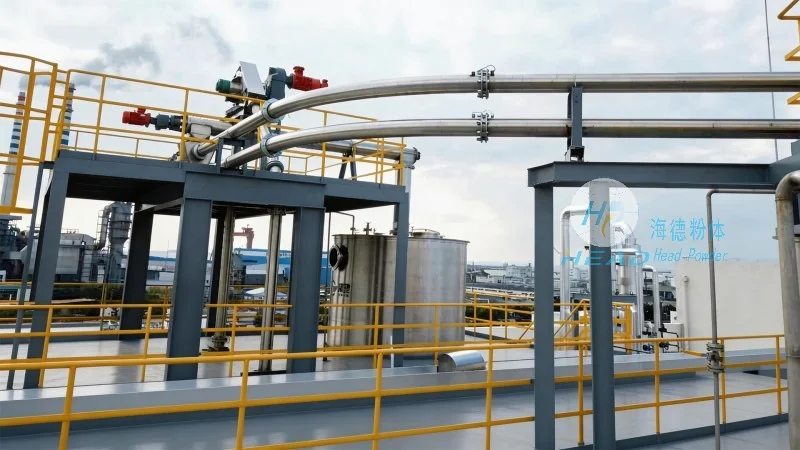
Corn starch is a fine powdery material, with particle sizes mostly between 5-30 microns. It is characterized by low density, easy dust generation, strong hygroscopicity, and poor flowability. During sealed conveying, static accumulation and temperature and humidity changes must be avoided, as this may cause arching, blockages, or quality degradation. Therefore, the conveying system must balance sealing, moisture resistance, and stability.
Product Introduction
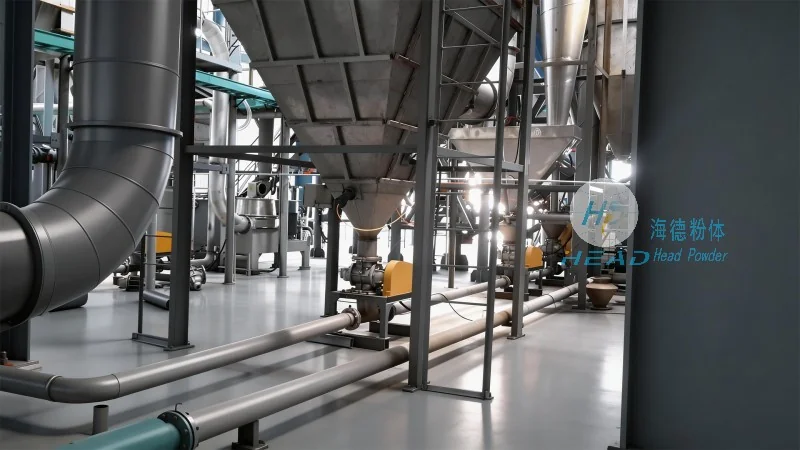
The pneumatic corn starch conveying system provided by Head Powder uses positive or negative pressure dense phase conveying technology, customizing designs based on user site layout, capacity requirements, and material characteristics. The system includes a feeding device, conveying pipeline, air source equipment, separation and dust removal unit, and an automated control system, achieving fully enclosed operations from feeding and conveying to storage, effectively controlling dust leakage, reducing material loss, and adapting to different distances and height differences.
Product advantages
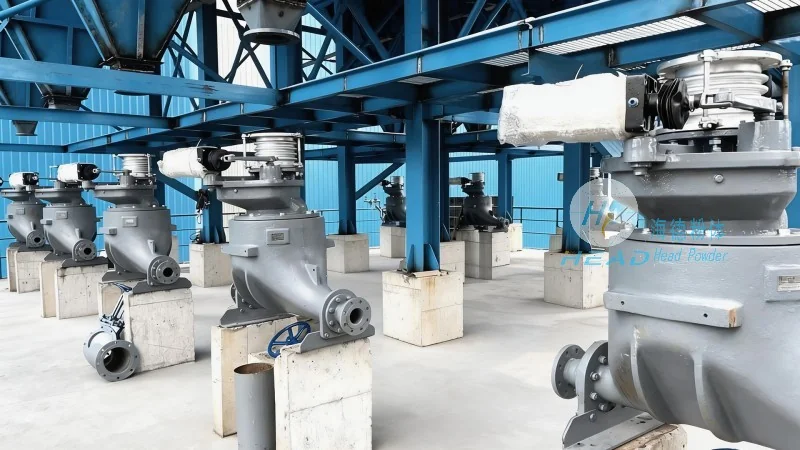
To address customer pain points, this solution uses fully sealed pipelines for conveyance, eliminating dust dispersion at the source and improving the workshop environment. Uses moisture-proof and anti-static structural design to prevent material clumping and static hazards. The system supports intelligent control and remote monitoring, reducing the frequency of manual intervention and improving conveying efficiency and stability. At the same time, modular components facilitate maintenance and reduce long-term operating costs.