

Melamine pneumatic conveying solution
In the production and processing of melamine, traditional transportation methods often face issues such as dust accumulation, material moisture and caking, low conveying efficiency, and severe equipment wear. These issues not only affect the production environment but may also lead to material waste, frequent equipment downtime, and increased operating costs. How to achieve safe, efficient, and low-loss conveying has become a focal point for relevant enterprises.
Material characteristics: The special properties of melamine
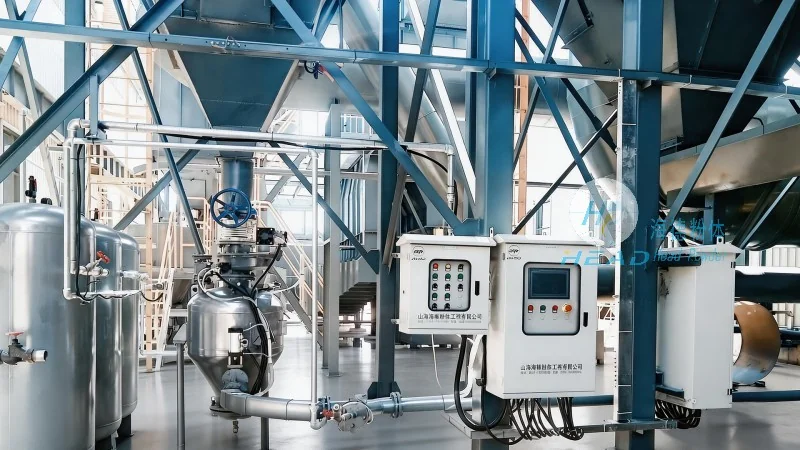
Melamine is a white crystalline powder characterized by strong hygroscopicity, easy clumping, fine particle size (usually over 100 mesh), and poor flowability. During transportation, materials are prone to sticking to pipes due to moisture, or large amounts of dust are generated due to particle crushing, placing high demands on equipment sealing and conveying processes.
Product Introduction: Head Powder Melamine Pneumatic Conveying System
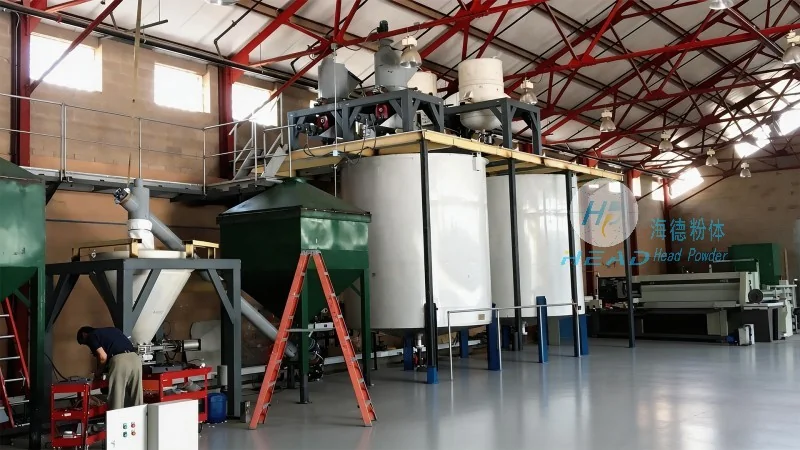
Head Powder offers customized pneumatic conveying solutions and complete system equipment tailored to the material characteristics of melamine. This system uses sealed pipelines for delivery, using compressed air or inert gas as power to steadily transport melamine powder from storage points to usage points. The system can be customized for non-standard design based on customer site space, conveying distance, and production capacity requirements, covering multiple forms such as positive pressure, negative pressure, and dense phase conveying.
Product Advantages: Targeted solutions to customer pain points
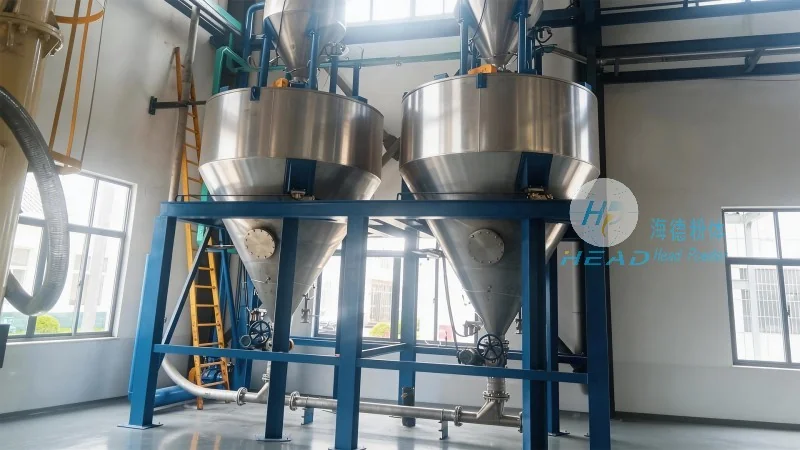
To address the dust pollution problem faced by customers, Head Powder uses fully sealed pipelines and high-efficiency dust removal devices to achieve a dust-free working environment; To address the characteristics of material caking easily and poor flowability, the system is equipped with a fluidization device, arch-breaking mechanism, and moisture-proof and dehumidifying modules to facilitate smooth conveying; To address material breakage, the system optimizes airflow velocity and pipeline elbow design to effectively reduce particle crushing rate; Additionally, the system integrates an intelligent control system that can monitor parameters such as conveying pressure and material-gas ratio in real time, enabling automated operation and fault warnings, reducing manual intervention and improving overall efficiency.