

Pneumatic conveying solution for mannitol powder
In industries such as pharmaceuticals, food, and chemicals, mannitol powder often faces issues such as blockages, dust swirling, material damage, and cross-contamination during transportation. Traditional manual feeding or mechanical conveying methods are not only inefficient but also difficult to contribute to the cleanliness of the production environment and material stability. Enterprises urgently need a sealed, efficient, and low-loss automated conveying solution to enhance continuous production line operation and product quality.
Material characteristics
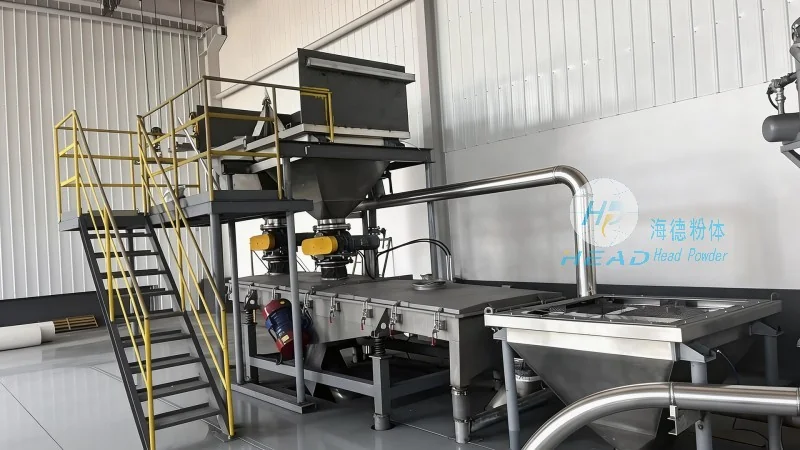
Mannitol powder has strong hygroscopic properties, small particle size, poor flowability, and a tendency to generate static electricity. During conveying, issues such as bridging, wall adhesion, and caking are likely to occur. Moreover, as a medicinal excipient, it has extremely high hygiene requirements; any external contamination will directly affect the quality of the finished product. Therefore, the conveying system must be moisture-proof, anti-static, easy to clean, and have good sealing properties.
Product Introduction
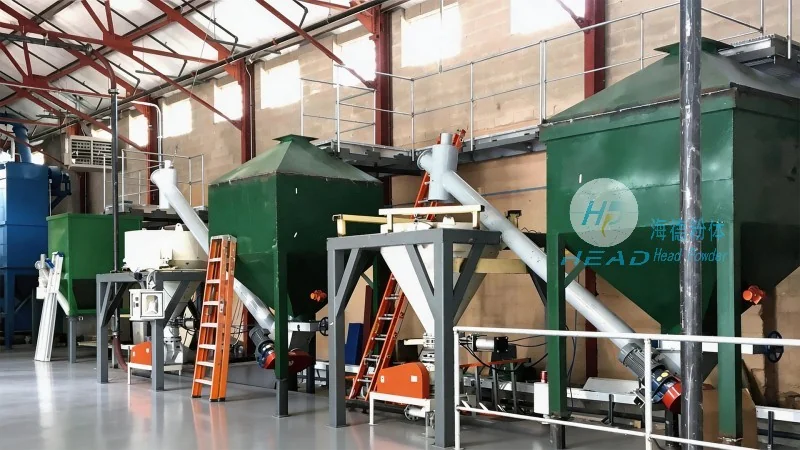
The pneumatic delivery system for mannitol powder provided by Head Powder uses a sealed pipeline conveying method, utilizing compressed air or inert gas as the power source to achieve stable and continuous delivery of powder from the storage silo to the point of use. The system can be customized with positive or negative pressure conveying modes according to the production line layout, and integrates modules such as automatic control, dust removal, and dehumidification devices to meet GMP clean production requirements.
Product advantages
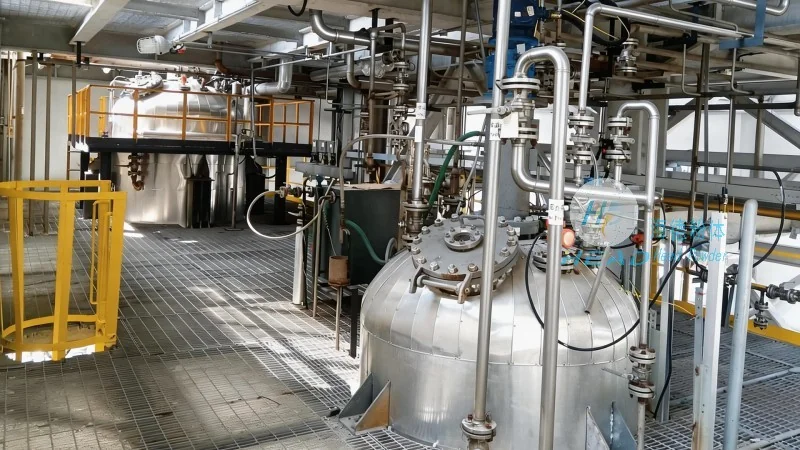
To address customer pain points, this system offers the following solutions: fully enclosed pipeline transport to fully prevent dust leakage and improve the working environment; Equipped with airflow arch bursting and pulse backblowing devices to improve material bridging and wall adhesion issues; Made of 304 stainless steel or higher, supporting CIP/SIP cleaning to prevent cross-contamination; The automated control system enables relatively accurate feeding, reduces manual intervention, and improves production efficiency.