

Pneumatic conveying solution for stearic acid powder
During the production and processing of stearic acid powder, the material conveying stage often faces issues such as dust swirling, pipeline blockages, moisture damage, and high losses, seriously affecting production continuity and environmental safety. How to achieve sealed, clean, and efficient conveying has become a pressing pain point for many enterprises.
Material characteristics
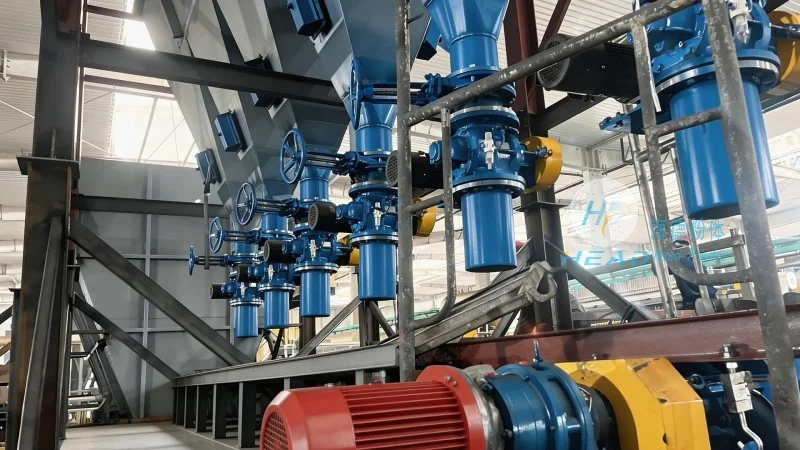
Stearic acid powder is a fine powdery material characterized by a low melting point, easy clumping, easy adhesion, and sensitivity to temperature. Its particles are fine and have poor flowability, making it prone to bridging and blockage in traditional mechanical conveying. It also absorbs moisture and deteriorates when exposed to air, placing high demands on the conveying system's sealing, temperature control, and anti-stick measures.
Product Introduction
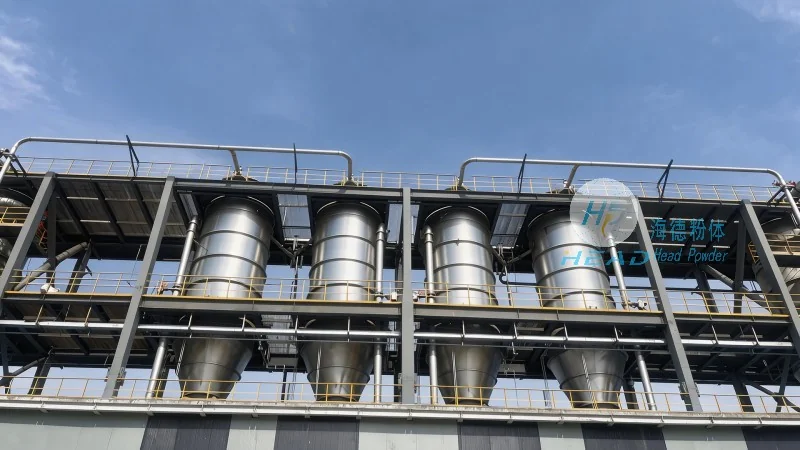
Head Powder has developed a pneumatic conveying system for stearic acid powder based on the unique physical properties of stearic acid powder. This system uses the principle of positive or negative pressure dense phase pneumatic conveying, using compressed air or inert gas as the power source to ensure smooth material delivery within a sealed pipeline. The system is equipped with a dedicated feeding device, anti-stick inner wall treatment pipelines, gas-solid separation equipment, and an intelligent control unit. It can be customized according to customers' on-site process conditions to meet different production capacity, distance, and environmental requirements.
Product advantages
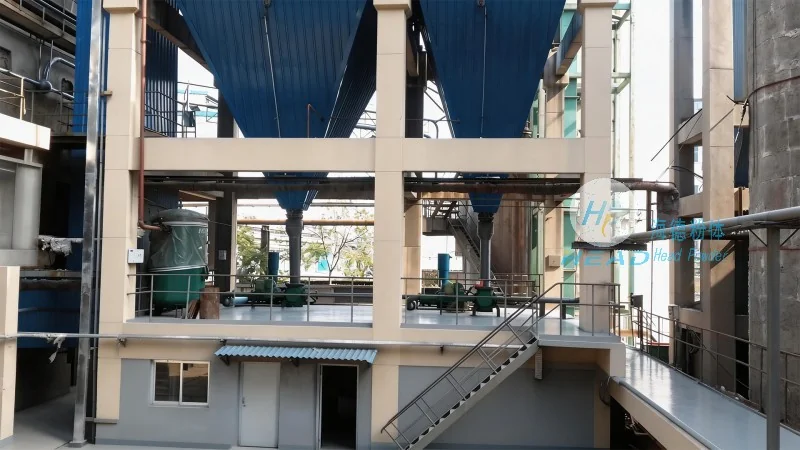
To address pain points such as stearic acid powder being prone to clogging, moisture, and dust, Head Powder offers the following solutions:
- Anti-blocking design: Special inner wall coatings or bushings are used to reduce material adhesion; Combined with pulse backflow and fluidization devices, pipeline blockage is avoided.
- Sealed conveying: Fully enclosed pipeline system effectively suppresses dust leakage, improves workshop environment, and meets environmental protection requirements.
- Temperature control supported: Cooling or heating the air source to control the conveying temperature within the safe range of the material to prevent melting or deterioration.
- Intelligent control: Integrates PLC and sensors to monitor conveying pressure, flow, and temperature in real time, enabling automatic adjustment and fault alarms, reducing manual intervention.