

Long-distance silo pump conveying project for anode graphite powder in Chenzhou, Hunan
A new energy materials company located in Chenzhou, Hunan, mainly engages in the production and processing of lithium battery anode materials. In the transfer process of graphite powder, the original system used mechanical conveying. Due to limitations in plant layout and logistics channels, powder had to be transported long distances from the grinding workshop to a finished product warehouse several kilometers away. Due to the characteristics of graphite powder such as fine particle size, poor flowability, and easy dust generation, traditional mechanical conveying is not only inefficient and energy-consuming, but also frequently suffers from pipe blockages and dust leakage, seriously affecting production line continuity and on-site environmental standards.
Customer pain points
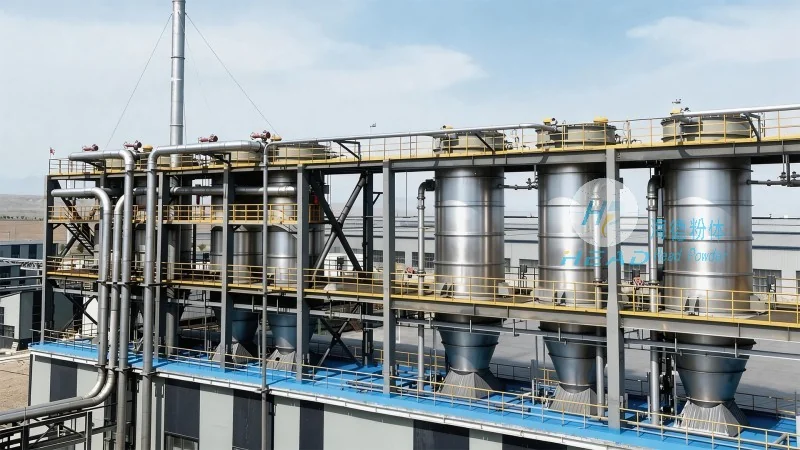
The core challenges faced by clients focus on three points:
First, the conveying distance exceeds 800 meters and involves multiple climbs and turns, making it difficult for conventional pneumatic conveying systems to maintain a stable material-air ratio, making pipeline blockages very likely;
Second, graphite powder is highly valuable, and strict control of damage and loss during conveying is required. Traditional methods have a high powder breakage rate, affecting product consistency;
Third, as environmental regulations become stricter, workshops must meet dust-free operation standards. The original open conveying method leads to dust overflow, which not only increases cleaning costs but also poses safety risks.
Solution
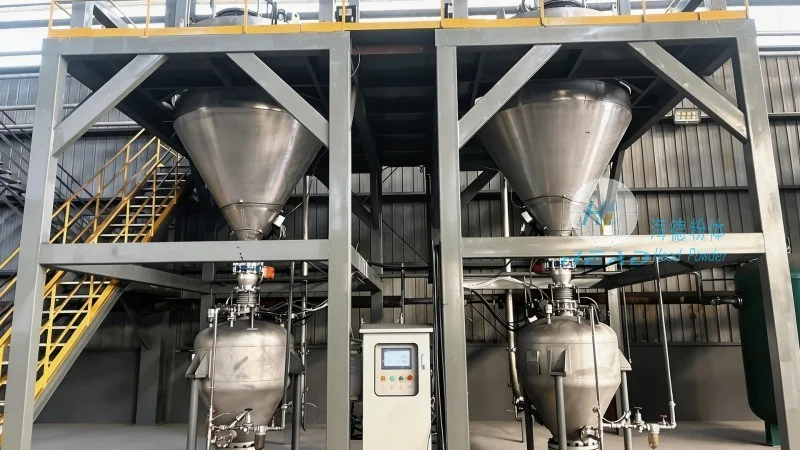
To address these pain points, Head Powder customized a long-distance positive pressure concentrate phase conveying system for the silo pump. The system adopts a high-density, low-pressure conveying principle, using pressure control from the silo pump and gas-filling arch-breaking technology, enabling graphite powder to move stably within the pipeline in a "bolt flow" pattern, effectively overcoming long-distance, multi-curve conveying resistance. The entire system is equipped with an intelligent variable frequency air source, automatic compartment switching, and an online plugging device, ensuring a continuous and smooth conveying process. At the same time, all interfaces use double-layer sealing structures and are equipped with pulse dust collection devices, achieving fully sealed operation from material intake to warehousing, with dust emission concentrations below national environmental protection limits.
Application Effects
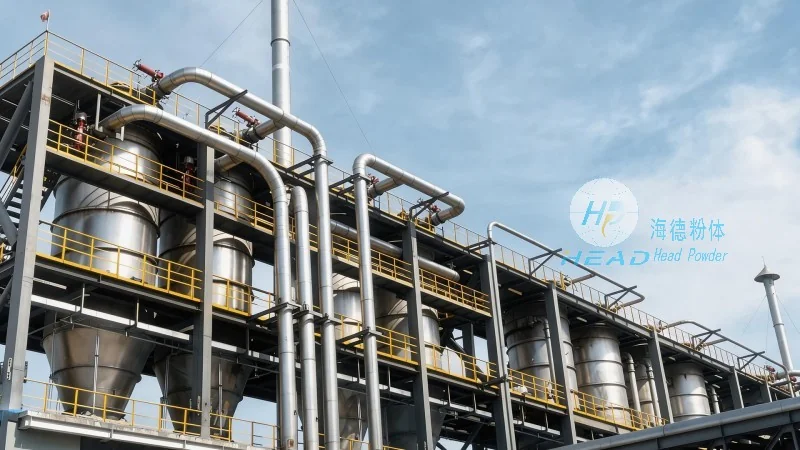
After the project is put into operation, the single-line conveying capacity will reach 15 tons per hour, with a conveying distance of 850 meters, and the total power consumption will be reduced by more than 40% compared to the original mechanical plan. The powder damage rate is controlled within 0.5%, with no visible dust leakage on site. The number of operators and maintenance personnel per shift has been reduced from 6 to 2. This project has become a benchmark case for long-distance pneumatic conveying in the local new energy materials industry, providing reliable technical reference for similar projects.