

Quicklime powder silo pump dense phase conveying project in Baise, Guangxi
An industrial user in Baise, Guangxi, needed to transport quicklime powder over a long distance and with high efficiency in a sealed manner during production to match the downstream process rhythm. Due to the high dispersibility, easy absorption of moisture, and dust generation of quicklime powder, traditional open conveying methods not only cause material waste but also bring environmental pollution and safety risks.
Customer pain points
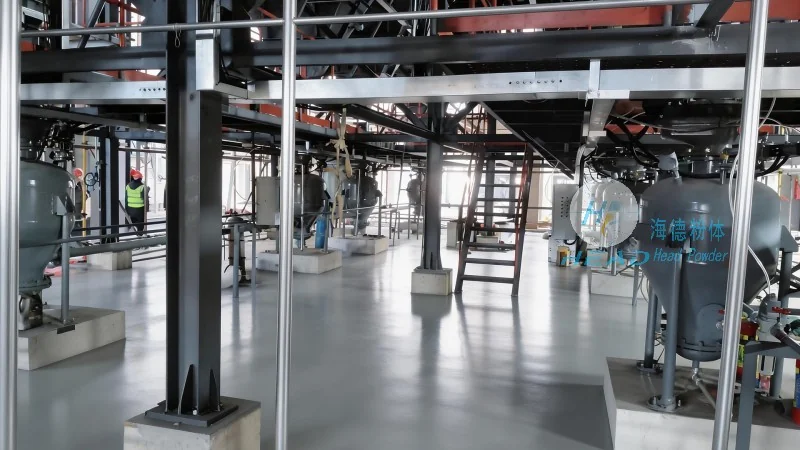
- Quicklime powder generates severe dust during transportation, creating harsh working environments that do not meet environmental protection requirements;
- Materials easily clump after absorbing moisture, leading to pipeline blockages and frequent equipment failures;
- Long-distance transmission has high energy consumption and persistently high operating costs;
- The existing conveyor system requires frequent maintenance and heavy manual cleaning workload, affecting production continuity.
Head Powder Solutions
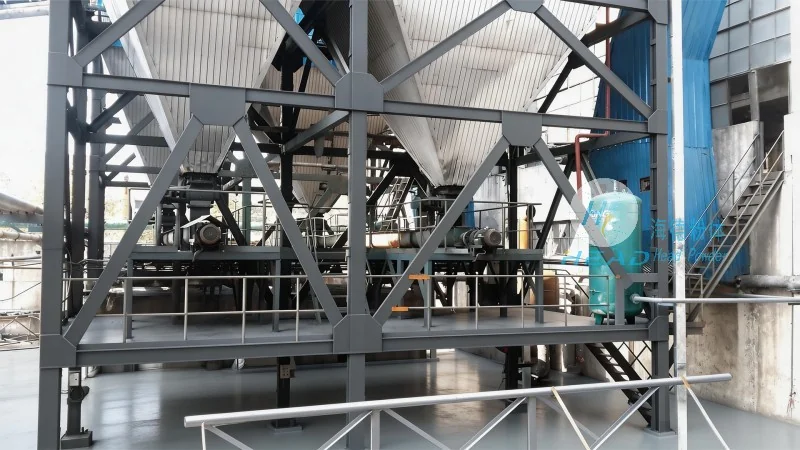
To address these pain points, Head Powder has customized a dense phase conveying system for the silo pump for the customer. The system uses a silo pump as the sending device, utilizing compressed air to stably transport quicklime powder in a dense-phase plug flow form within a closed pipeline. The entire conveying process is fully sealed, with no dust leakage; By accurately controlling the air-to-material ratio, materials move smoothly at low flow rates, effectively suppressing moisture absorption and agglomeration; At the same time, the system is equipped with an intelligent control module that can automatically adjust parameters according to working conditions, reducing energy consumption and reducing manual intervention.
Project Results
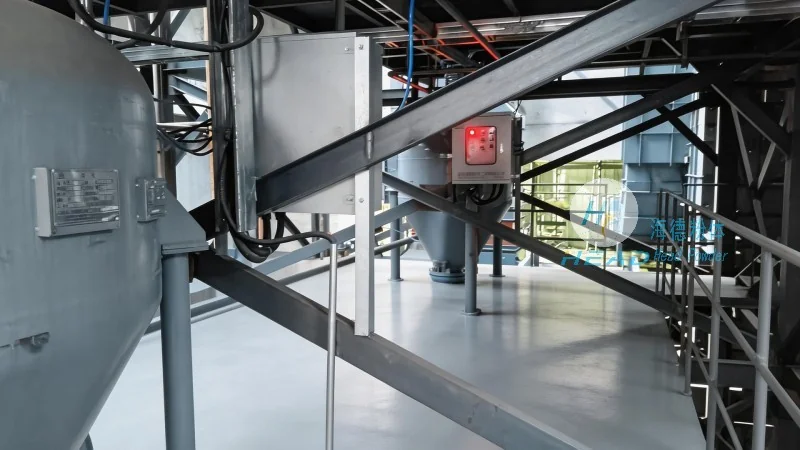
After the project was implemented, quicklime powder transport efficiency improved, on-site dust concentrations dropped below environmental standards, pipeline blockage frequency decreased by about 80%, equipment maintenance cycles were extended, and overall operating costs were reduced. Customers have reported that the system operates stably and better meets the demands of 24-hour continuous production.