

Jiangsu Suzhou Nano Calcium Carbonate Dust-Free Conveying Project
In a nano calcium carbonate production company in Suzhou, Jiangsu, the powder conveying process has long faced issues such as dust spillover, high raw material loss, and frequent equipment maintenance. Traditional conveying methods struggle to meet the sealed and dust-free requirements of nano-level ultrafine powders, affecting not only the working environment but also limiting capacity stability and product quality consistency.
Customer pain points
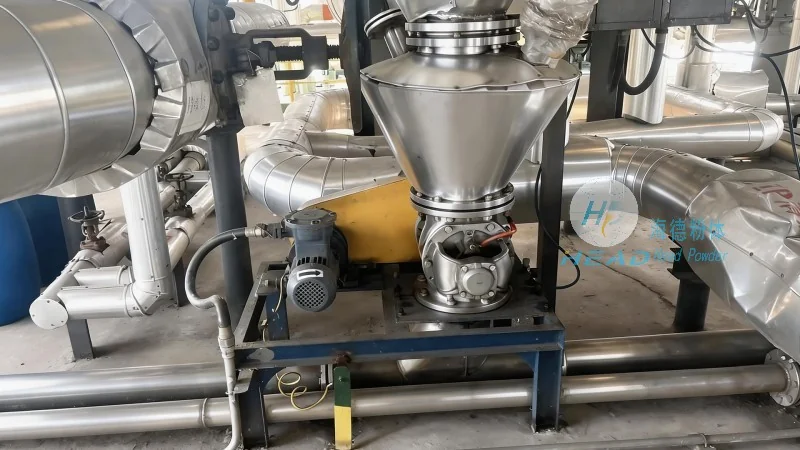
1. Severe dust pollution: Nano calcium carbonate particles are extremely small, making it highly susceptible to dust during transportation. On-site PM2.5 concentrations exceed standards, threatening employee health.
2. High material loss rate: Traditional open conveying causes materials to drift and stick to walls, with an actual utilization rate of less than 85%.
3. Frequent equipment blockages: Ultrafine powder has poor flowability and tends to accumulate at elbows and valves, requiring frequent shutdowns for cleaning.
4. Low degree of automation: Many manual transfer steps, poor measurement accuracy, and difficulty linking with back-end packaging and batching systems.
Solution
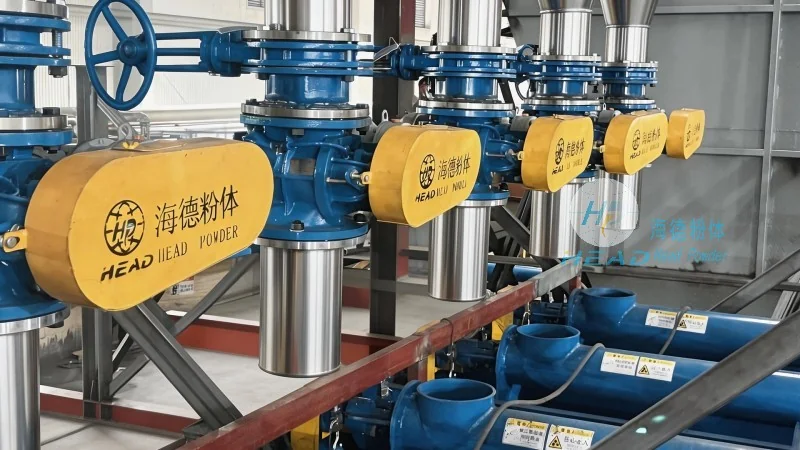
Head Powder addressed these pain points by providing the Suzhou customer with a fully sealed dust-free conveying system. The system adopts the principle of negative pressure pneumatic conveying, combined with dedicated fluidization devices and anti-static piping design, achieving fully enclosed and automated transfer of nano calcium carbonate from storage silos to all usage points. Key components use wear-resistant materials to reduce clogging and wear; An integrated intelligent control system can monitor conveying pressure, flow, and equipment status in real time, improving operational efficiency.
Project Results
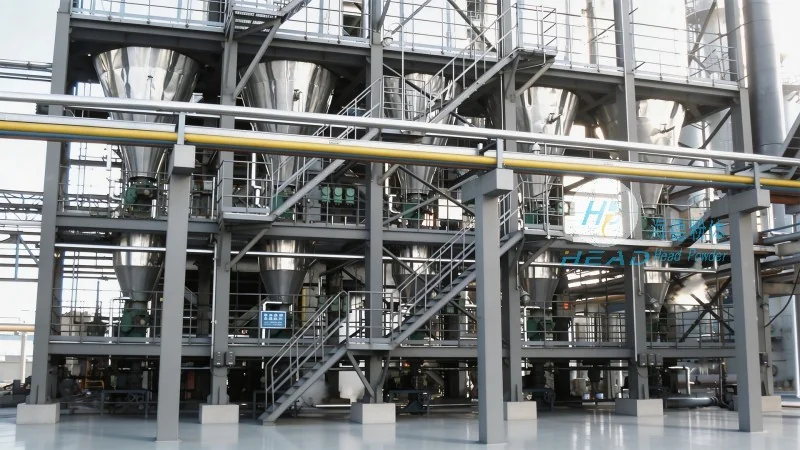
After the dust-free conveying project was put into operation, workshop dust concentrations dropped below safety standards, material loss rates were controlled within 3%, equipment failure rates dropped by 70%, and annual labor and maintenance costs were saved by over 300,000 yuan. The production line can operate continuously for 24 hours, laying a solid foundation for future capacity expansion.