

Case Study of Low-Crushing Catalyst Particle Conveying in Nanchang, Jiangxi
During the transport of catalyst particles, the integrity of the particles directly affects subsequent process efficiency and product quality. A catalyst manufacturer in Nanchang, Jiangxi has long faced challenges such as high particle crushing rates and significant conveying losses, urgently needing a low-crushing, stable energy conveying solution. Based on in-depth analysis of material properties, Head Powder customized a low-crushing pneumatic conveying system for this customer, achieving gentle and efficient particle conveying.
Customer pain points
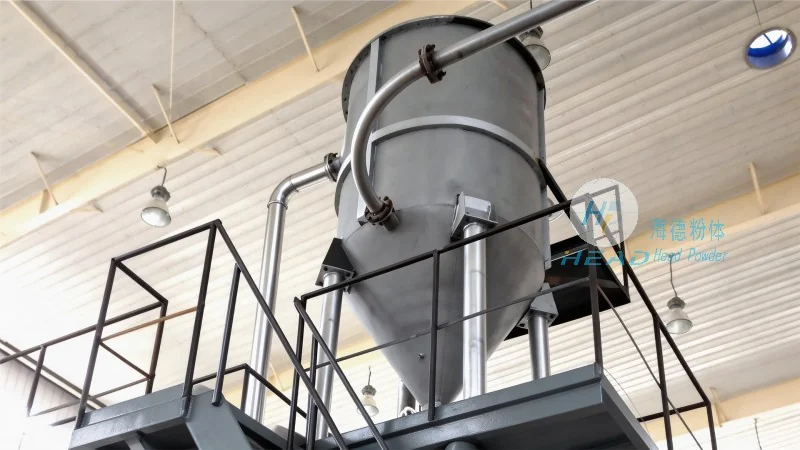
The catalyst particles used by this company have relatively low particle strength. Traditional mechanical or conventional pneumatic conveying methods easily cause particle collisions and friction resulting in crushing, with the crushing rate once exceeding 5%. This not only causes raw material waste but also affects catalyst activity and regeneration performance. At the same time, dust pollution generated during conveying increases environmental protection and cleaning costs, urgently requiring a conveying technology that can effectively control crushing rates.
Product advantages
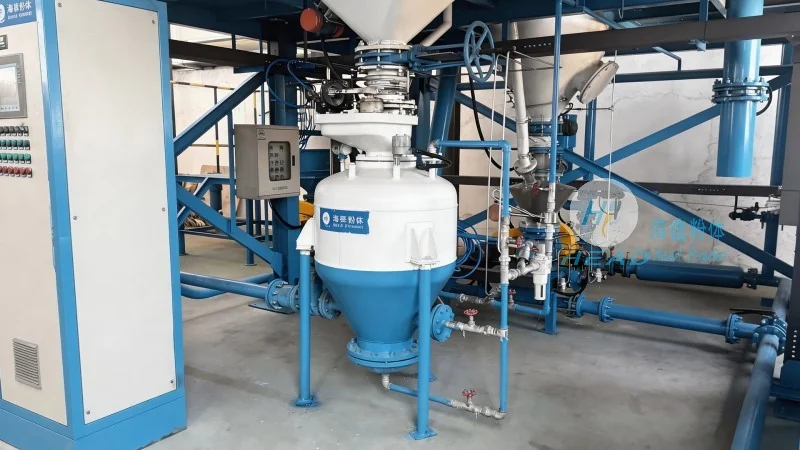
Head Powder offers the following solutions for the low crushing requirements of catalyst particles:
- Optimized airflow parameters:By accurately calculating gas-solid ratio, conveying air speed, and pipeline pressure drop, the collision energy between particles and the pipe wall is kept below the safety threshold, reducing the crushing rate to within 0.3%.
- Flexible bending pipe design:Uses large-curve radius bends and wear-resistant liners to reduce the impact force of particles at the turning point, further protecting particle integrity.
- Intelligent Control:Equipped with variable frequency regulation and online monitoring systems, it adjusts the conveying volume in real time, helping the system operate normally under optimal conditions.
After the solution was put into use, the client's catalyst particle crushing rate dropped significantly, raw material utilization improved, and conveying system energy consumption dropped by about 15%, earning high recognition from the customer.