

Fujian Zhangzhou Traditional Chinese Medicine Ultrafine Powder Sealed Complete Set Project
At a traditional Chinese medicine processing company in Zhangzhou, Fujian, the traditional preparation of ultrafine powder commonly suffers from dust emissions, severe material loss, and harsh operating environments. The company hopes to introduce a high-efficiency ultrafine powder production line capable of sealed and automated production to improve product quality and production safety.
Customer pain points
The original crushing process used open equipment, resulting in high dust concentrations, which not only affected operator health but also caused material waste of about 8%~12%. At the same time, there is a large variation in fineness between batches, which cannot meet the requirements for uniform particle size in Chinese medicine ultrafine powders. In addition, multi-step manual transfer is inefficient, and cross-contamination risks are prominent.
Solution
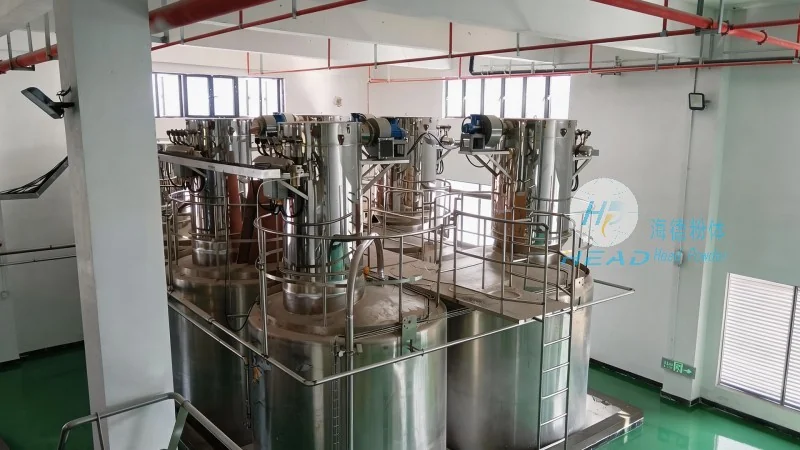
Head Powder has tailored a sealed complete set of ultrafine Chinese medicine powder in Zhangzhou, Fujian, to meet this need. The system integrates ultra-fine grinding, classification, sealed conveying, dust collection, and intelligent control modules, enabling fully enclosed operation from feeding to finished product packaging, improving dust leakage and material loss issues.
System composition and operating process
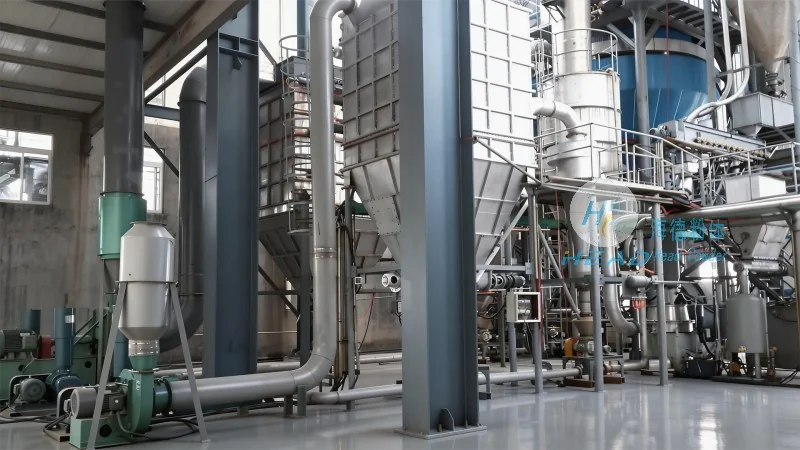
The entire system consists of a vibrating feeder, ultrafine pulverizer (with forced classification wheel), pneumatic conveying pipeline, pulse bag dust collector, hopper, and central control cabinet. The raw materials of the traditional Chinese medicine enter the crushing chamber through a sealed feeding port, where they are crushed to the desired fineness through high-speed impact and shear force; The classification wheel screens qualified powders in real time, and unqualified materials automatically return to the crushing area; The finished product is conveyed by sealed pneumatic force to the storage tank, then sealed by an automatic packaging machine. Throughout the process, dust-laden gases are filtered by pulse dust collectors and discharged to meet standards, with a dust recovery rate exceeding 99%.
Core effect
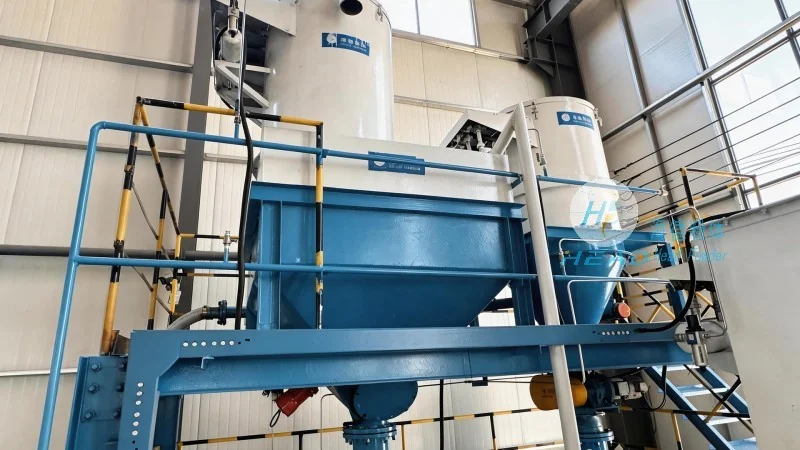
After the project is implemented, workshop dust concentration will drop below 0.5mg/m³, material loss will be controlled within 2%, crushing fineness (D90) will be stable at 300~1200 mesh, and a single machine will have a capacity of 150~200kg/h. Comprehensive energy consumption will be about 15% lower than traditional processes. The client achieved the dual goals of clean production and cost reduction and efficiency improvement.