

Example of centralized powder supply and conveying in Jiangmen Mixing Workshop, Guangdong
In the production of rubber and plastic products, the mixing workshop is one of the core processes, and its powder conveying efficiency and cleanliness directly affect product quality and production costs. This paper takes the actual renovation project of a mixing workshop in Jiangmen, Guangdong as an example to present the application process of the centralized feeding and conveying system.
Case Background
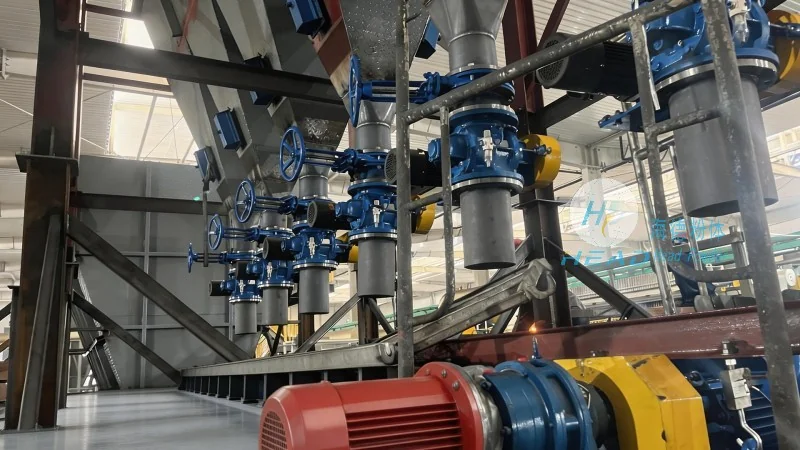
This workshop originally used manual handling and weighing methods to feed powders such as carbon black, calcium carbonate, and silica black into the internal mixer. As production capacity increased, the manual model gradually exposed problems: severe dust leakage and harsh working environments; Large fluctuations in feeding errors affect formulation stability; High raw material loss rate increases overall costs.
Customer pain points
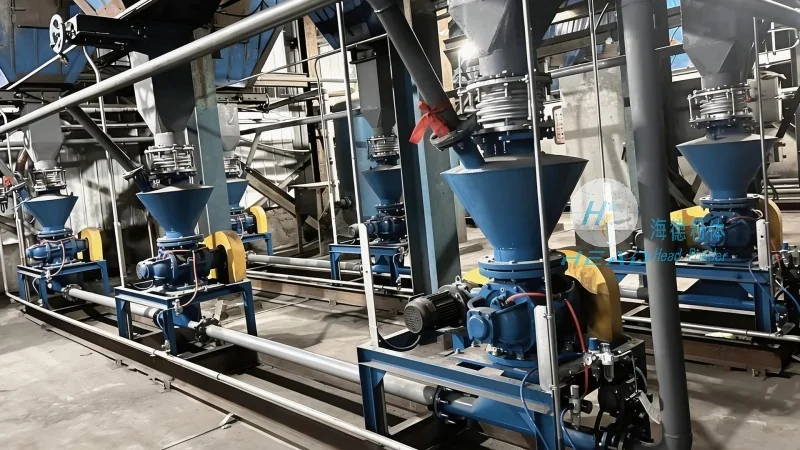
- Dust pollution: Open dumping leads to excessive dust concentration in the workshop, frequent equipment cleaning, and high health risks for employees.
- Efficiency bottleneck: Manual handling, unpacking, and weighing are cumbersome, with limited handling capacity per shift, making it difficult to match production line cycles.
- Measurement is not very accurate: Manual weighing is affected by individual operational differences, with formula deviations between batches exceeding 3%, affecting product quality consistency.
- Material waste: Leftover, spilled, and cleaning in bags are difficult, resulting in an effective powder utilization rate of only about 90%.
Head Powder Solutions
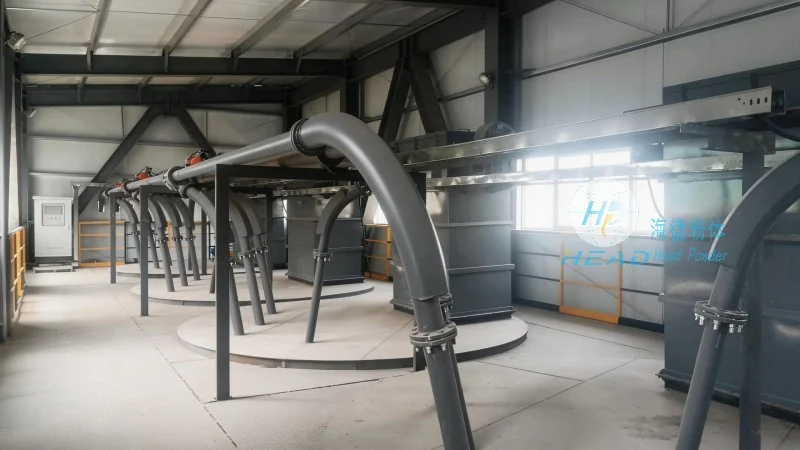
To address these issues, Head Powder designed and implemented a centralized powder supply and conveying system for the workshop. The system centers on pneumatic conveying, equipped with automatic unpacking, metering, storage, and conveying modules, enabling fully enclosed automated operations from raw material inlet to internal mixer feeding.
- Closed pipeline transportation: Powder is transported directly from the storage tank to the point of use via pneumatic conveying pipelines under negative or positive pressure, with no dust leakage and a significant improvement in the workshop environment.
- A more accurate weighing module: Equipped with high-precision weighing sensors and PLC control systems, with measurement errors for single materials controlled within 0.5%, and supports automatic recipe calls.
- Intelligent control platform: The centralized control room can monitor material levels, flow, and equipment status in real time, and record production data for easy traceability and optimization.
- Modular expansion: The system adopts standardized component design, allowing flexible addition of storage tanks or conveyor lines as production capacity grows.
After the upgrade, the workshop's powder loss rate dropped below 2%, the processing volume per shift increased by 2.5 times, the number of operators decreased from 8 to 2, and cleanliness met food-grade standards. This case proves that the centralized feeding and conveying system is an effective way to address powder pain points in the mixing workshop.