

Wear-resistant and wear-resistant glass fiber powder transport case in Guilin, Guangxi
Fiberglass powder has broad application value in industrial production, but during transportation, its high hardness and abrasiveness often cause rapid wear of equipment pipe walls, resulting in frequent shutdowns for maintenance and high maintenance costs, and even affecting production continuity. A fiberglass processing company in Guilin, Guangxi, once faced a similar problem. Head Powder customized a wear-resistant and anti-wear conveying solution for it, addressing this pain point.
Case Background
The company mainly handles fiberglass powder raw materials. The original conveying system used conventional metal pipelines, but after three months of operation, localized wear and perforation appeared, resulting in severe powder leakage. Because production lines cannot be shut down for long periods, companies have had to stock up on a large number of spare pipelines and replace them frequently, which also comes with issues such as dust pollution and increased energy consumption. Enterprises urgently need a conveying solution that can operate sustainably.
Core pain points for customers
- Pipeline wear too fast:Fiberglass powder is hard and has sharp particles; the inner walls of conventional pipes are quickly worn down by high-speed airflow, with a service life of less than half a year.
- High maintenance costs:Some pipeline sections need to be replaced each quarter, with cumulative labor and material costs far exceeding budgets, and production stoppages for maintenance affecting capacity.
- Severe dust pollution:Leaks caused by wear create a harsh workshop environment, posing environmental and occupational health risks.
- Decline in conveying efficiency:As the inner wall roughness of the pipeline increases, pneumatic conveying resistance rises, energy consumption rises, and conveying speed decreases.
Head Powder Solutions
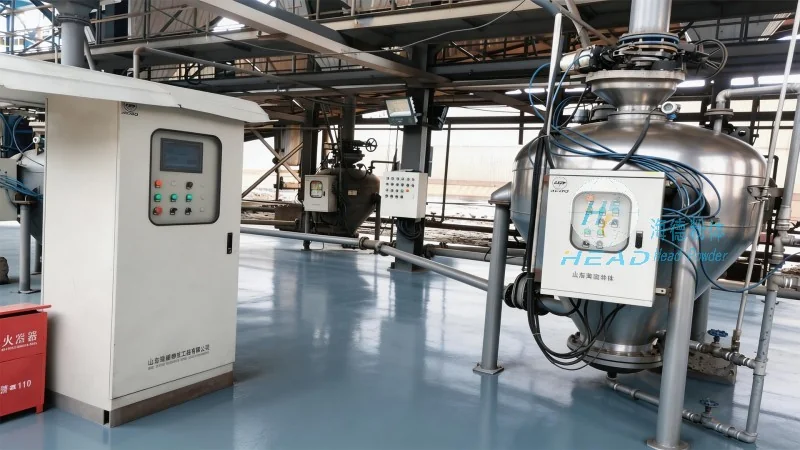
To address the high abrasive properties of fiberglass powder, Head Powder uses custom-made high-wear-resistant composite tubes lined with special ceramic layers, offering high surface hardness and low friction coefficient. At the same time, the conveying pipeline route and elbow curvature are optimized to reduce the impact angle of materials on the pipe wall. By adjusting the air-source pressure and solid-gas ratio, the particle collision speed is slowed down while facilitating the amount conveyed. The entire solution achieves the following effects:
- The pipe's service life is extended to over two years, and the inner wall wears evenly, eliminating the need for frequent replacement.
- The conveying system is well sealed, dust leakage issues are controlled, and the workshop environment meets standards.
- Energy consumption is reduced by about 15%, and conveying efficiency remains stable.
Application Effects
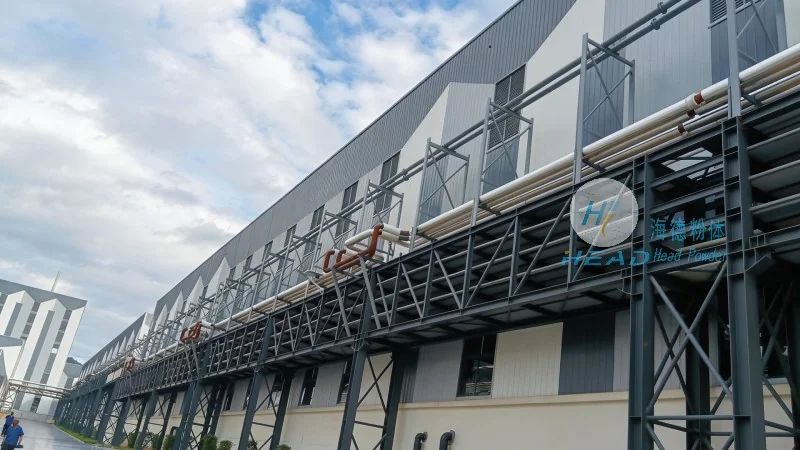
After the solution was implemented on-site at the customer site in Guilin, Guangxi, it operated continuously for over 18 months without any pipeline perforations, extended the inspection cycle from once a week to once a month, reduced annual maintenance costs by more than 60%, and improved overall production line utilization. Customer feedback stated, "It solved the wear problem that had troubled us for years."
Industry value
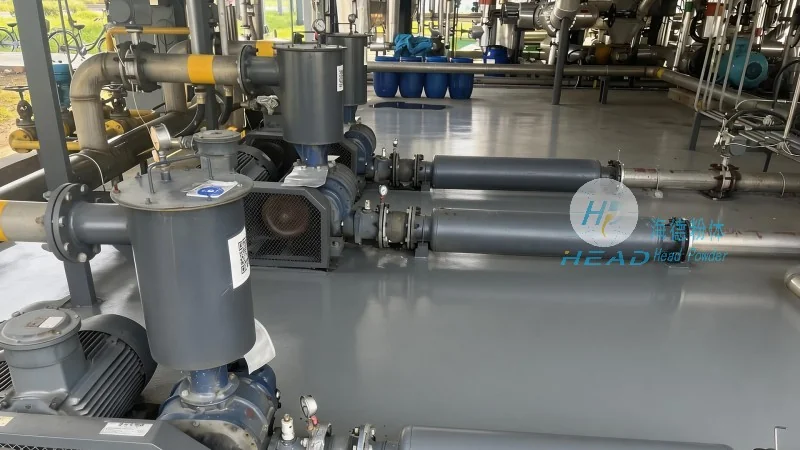
Wear and conveying issues are widespread in hard powders such as fiberglass powder, quartz powder, and alumina powder. Head Powder combines material selection with process optimization to provide a reusable technical path for wear-resistant and wear-resistant conveying. This solution is suitable for pneumatic conveying scenarios of highly abrasive materials in building materials, ceramics, metallurgy, chemicals, and other fields, balancing economy and reliability.