

PVC pneumatic conveying solution for pellets
During the processing and transportation of PVC pellets, many companies face issues such as dust emissions, high material loss, high labor costs, and low conveying efficiency. Traditional mechanical conveying methods not only cause severe equipment wear but also easily cause material blockages, affecting production continuity. At the same time, PVC pellets are prone to static electricity and easily absorb dust, further increasing the risk of contamination and maintenance difficulty during transportation. How to achieve clean, efficient, and low-loss material transportation has become an urgent problem for the industry.
Material characteristics
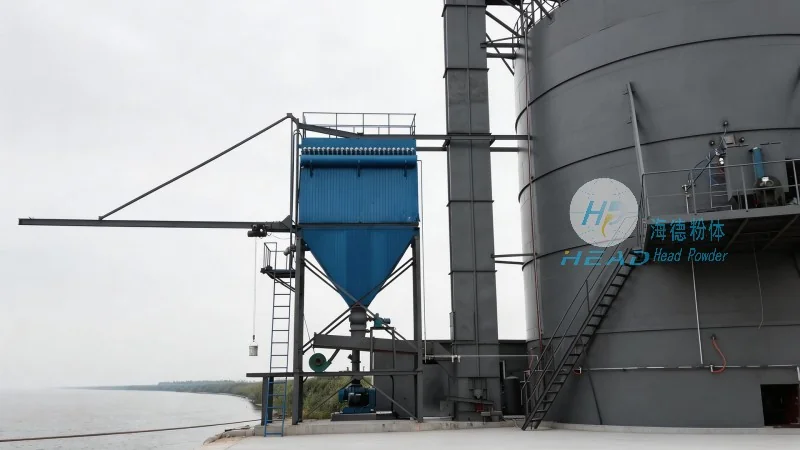
PVC pellets are thermoplastic pellets with a density of about 1.3~1.5 g/cm³, and particle sizes typically between 2~5mm. Its surface is smooth and has good fluidity, but it easily generates static electricity and easily attracts fine dust in dry environments. Additionally, PVC pellets are temperature-sensitive, so prolonged friction and heat generation during transport should be avoided, which can cause softening or caking. To address these characteristics, pneumatic conveying can effectively reduce material damage rates and maintain the cleanliness of the conveying environment.
Product Introduction
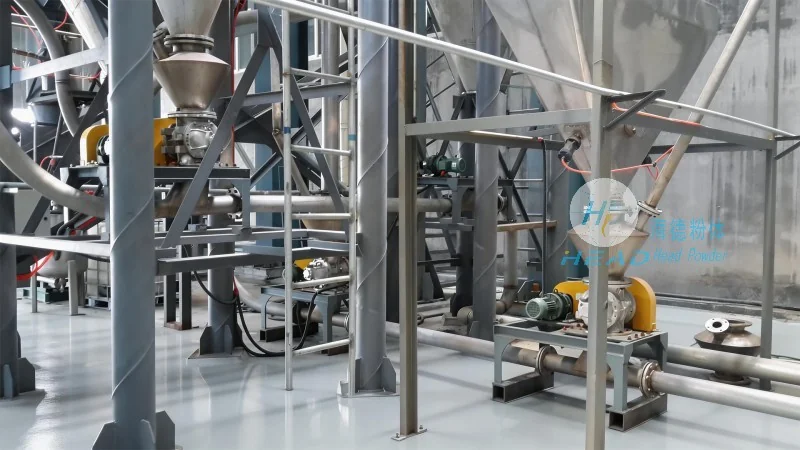
The PVC pneumatic conveying system provided by Head Powder uses sealed pipelines for conveying, using airflow to move materials from the feeding end to the receiving end. The system covers feeding devices, conveying pipelines, separation equipment, dust removal devices, and automation control systems, and can be customized according to customers' site layouts, conveying distances, and production capacity requirements. Whether for single raw material conveying or multi-station allocation, it can achieve relatively accurate and stable material flow.
Product advantages
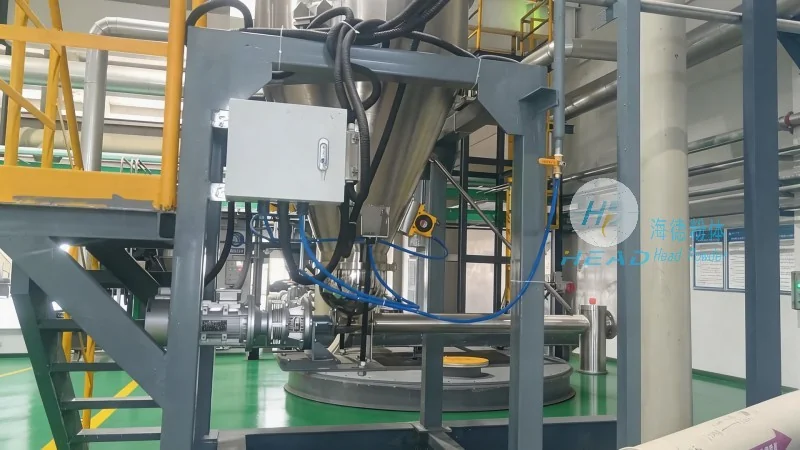
To address customer pain points, Head Powder offers the following systematic solutions:
- Environmentally friendly and dust-free: Fully enclosed negative pressure/positive pressure conveying, controlling dust leakage from the source to meet environmental protection requirements.
- Low damage conveying: Airflow suspension prevents mechanical compression and collision, maintaining good integrity of PVC pellets.
- Intelligent control:P LC automated control with real-time monitoring of conveying pressure and flow, abnormal alarms automatically trigger and reduce manual intervention.
- Flexible customization: Design non-standard solutions based on material characteristics, conveying distance, and space constraints to adapt to different production scenarios.