

Case Study of Long-Distance Coal Chemical Powder Conveying in Xuzhou, Jiangsu
In the process of coal chemical production, the long-distance transportation of powder materials has always been a focal point for enterprises. A coal chemical enterprise in Xuzhou, Jiangsu, faced the challenge of transporting powder raw materials over more than 500 meters from the storage area to the reaction section due to its expanded production scale. Traditional mechanical conveying methods not only consume high energy and require frequent maintenance, but are also prone to pipeline blockages and dust leakage, seriously affecting production continuity and environmental compliance. After extensive technical comparisons, the company introduced Head Powder's customized pneumatic conveying system, achieving stable, sealed, and efficient delivery of powder materials, successfully solving the above pain points.
Customer pain points
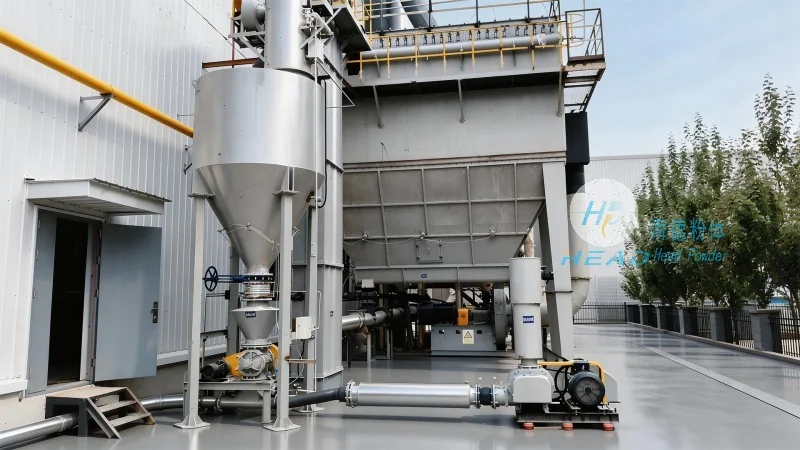
The company mainly encountered the following problems during long-distance powder conveying: First, the conveying distance was long, and traditional equipment could not meet the stable conveying requirements over 500 meters, leading to frequent pipe blockages; Second, energy consumption remains high, with the cost per ton of powder transported far above the industry average; Third, dust leakage causes a harsh workshop environment and increases environmental pressure; Fourth, equipment maintenance cycles are short, frequent shutdowns and repairs are common, affecting overall production efficiency.
Product advantages
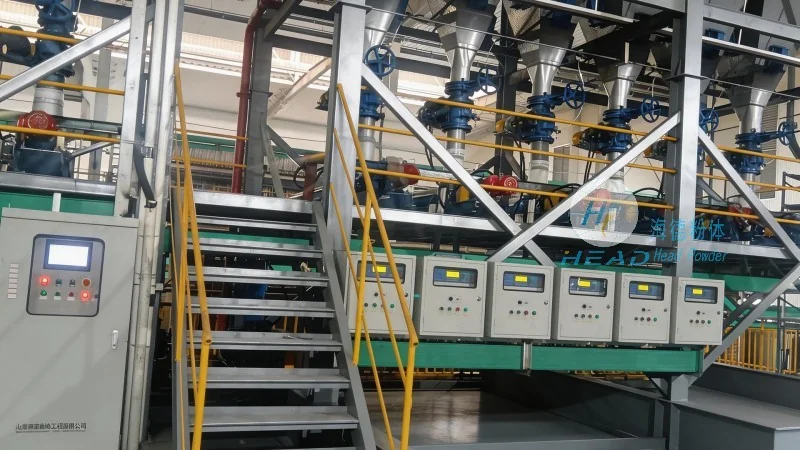
Head Powder addresses these pain points by providing a system solution centered on positive pressure pneumatic conveying. The system uses segmented pressurization technology, which helps maintain stable flow during long-distance powder conveying and effectively prevents pipe blockages; It is also equipped with an intelligent control system that automatically adjusts parameters such as air volume and air pressure based on material characteristics and real-time working conditions, achieving optimized energy consumption; Fully enclosed pipeline design to prevent dust leakage, meeting environmental protection requirements; Key components use wear-resistant materials to extend equipment service life and reduce maintenance frequency. After implementing this solution, the company's conveying efficiency increased by more than 30%, energy consumption decreased by about 20%, and equipment failure rates dropped significantly.